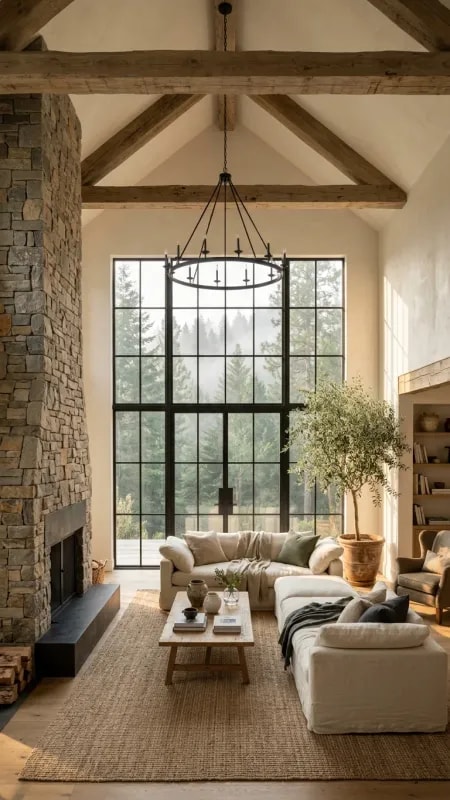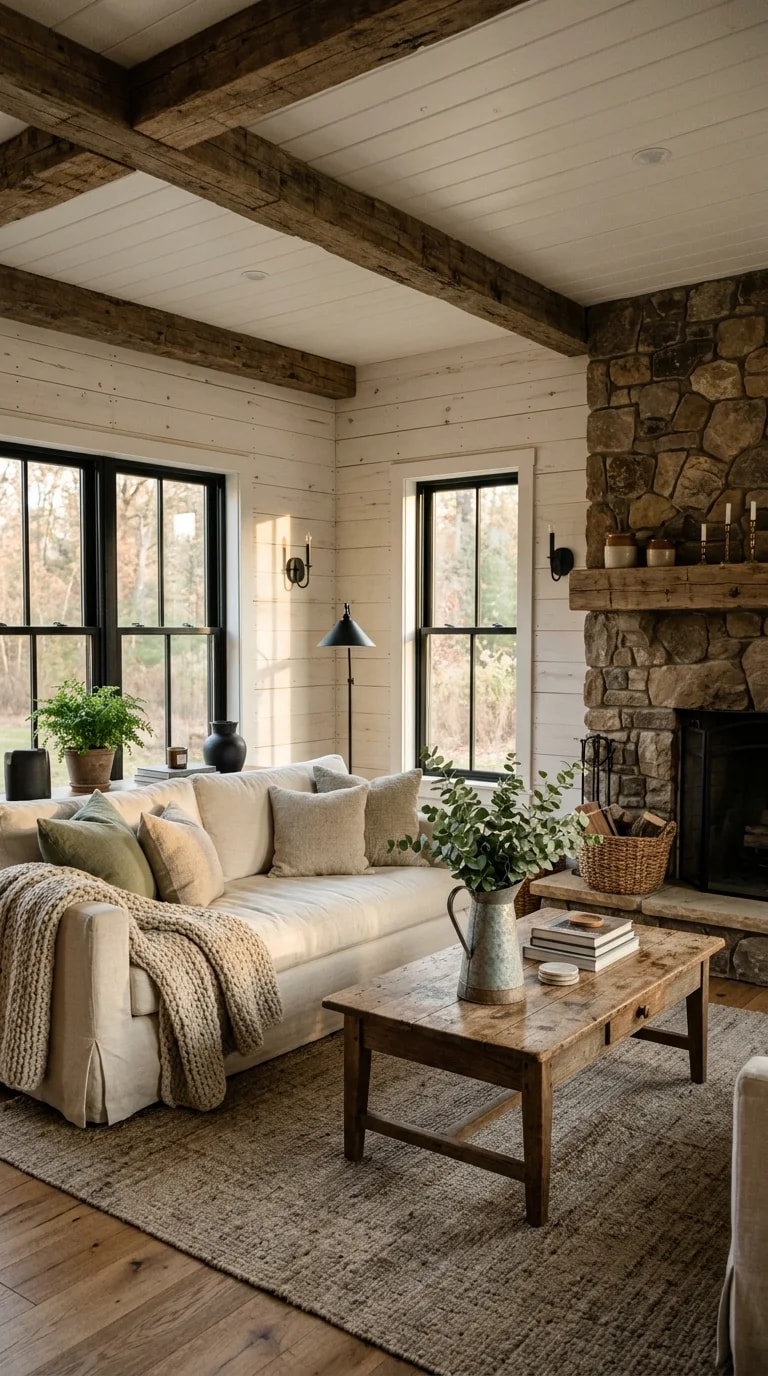
There is a particular kind of calm that settles into a room when every surface asks to be touched. This living room builds that feeling deliberately, starting at the far wall with a stone fireplace that rises past the beams. Rough, irregular masonry gives the eye something to climb, and the pale stone picks up the daylight pouring through the black-framed windows opposite. Rather than treating the hearth as decoration, the room treats it as the anchor — the point from which every other material decision radiates outward.
Against all that ruggedness, the white sofa reads almost weightless. Its clean lines keep the space from tipping into a cabin cliché, and the chunky knit throw tossed across one arm does the softening work that a dozen pillows could not. That single textural gesture — thick, loose loops of yarn against smooth upholstery — is the whole lesson of the room. Aesthetic home design rarely comes from adding more objects; it comes from placing one deliberate contrast where the eye will land. Cream against stone, soft against hard, matte wool against the dull sheen of an old metal pitcher.
The coffee table earns its place the same way. Distressed wood, worn at the edges, holds a simple metal vessel of greenery rather than a styled arrangement of books and trays. Muted green leaves echo the trees outside the windows, tying the interior palette to what is visible beyond the glass. Exposed beams overhead repeat the wood tone below, so the room feels enclosed rather than tall and drafty. It is a quiet form of symmetry — not mirror-image matching, but the same warm browns appearing at floor, eye level, and ceiling until the palette feels inevitable.
Light is the final layer, and it is doing more than brightening the space. Broad daylight from the left washes across the sofa and throws long, soft shadows toward the hearth, so the textures read differently as the hours pass. Nothing in the room fights for attention; the stone, the wool, and the wood each get a turn. That is the practical takeaway for anyone rebuilding a living room of their own: choose one dominant material, then introduce softer counterpoints in small doses, and arrange the seating so natural light can graze across them. Comfort, in the end, is a visual effect before it is a physical one — and this room proves how convincing it can be.