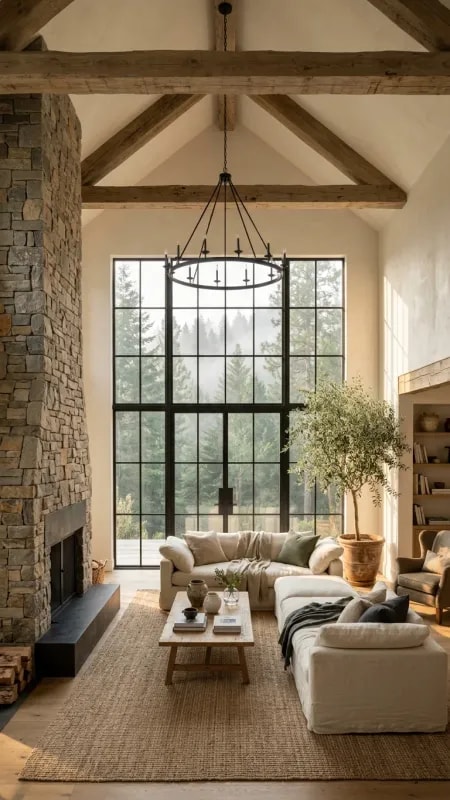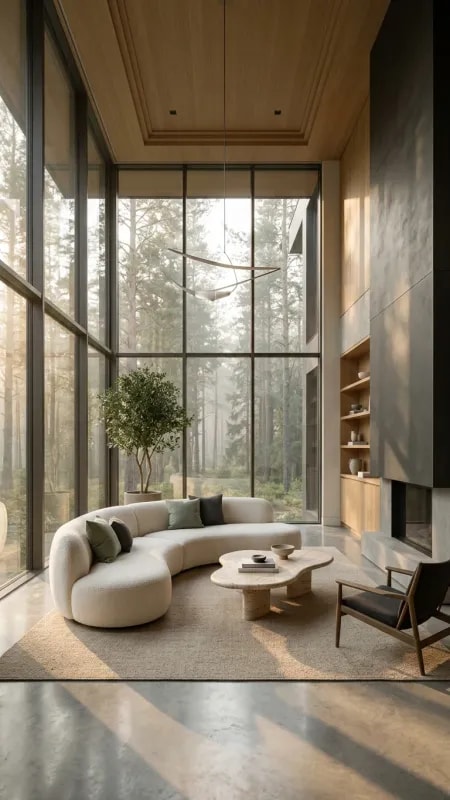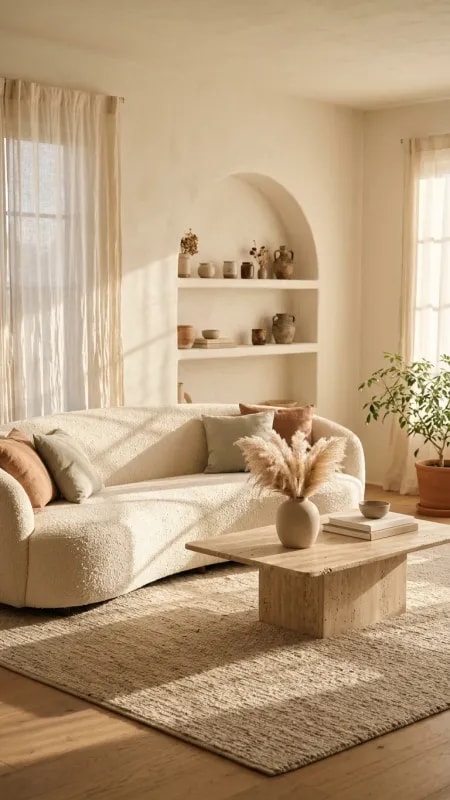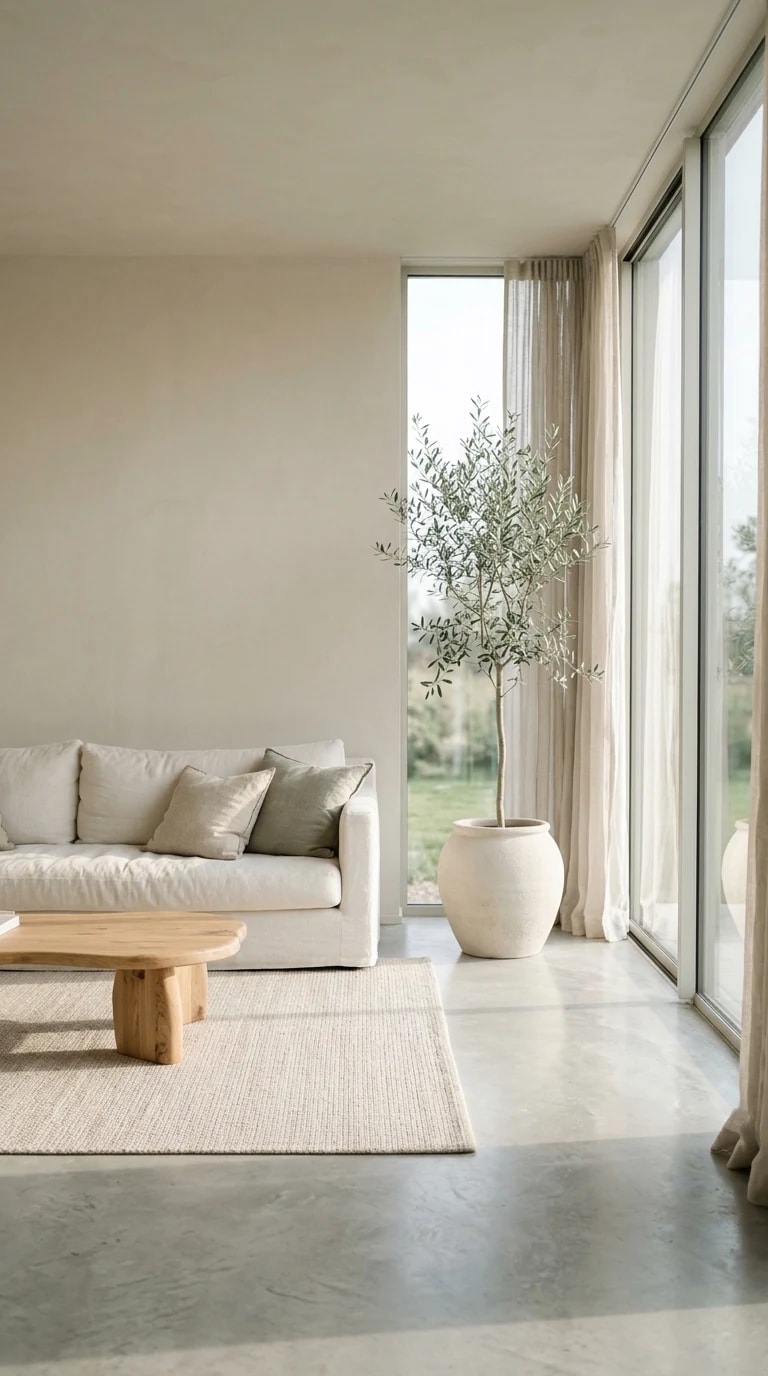
There is a particular hour in this room when the light does most of the decorating. It arrives sideways through floor-to-ceiling glass, diffused and unhurried, sliding across a plush white sofa before pooling on polished concrete. Nothing in the space fights for attention. The vertical framing sets a comfortable tension between the seating area's low, soft mass on one side and the tall bank of windows on the other, so the eye travels from cushion to curtain wall and back again without ever finding a hard stop. This is farmhouse design stripped of its usual props — no barn doors, no distressed signage, no galvanized buckets — and what remains feels closer to the original idea: a room built around weather, daylight, and the ordinary ritual of sitting down.
The palette does the quiet work. Cream upholstery, warm light-wood timber, pale sage, and the cool grey of the concrete floor form a sequence of neutrals that hold each other up rather than compete. Sage green pillows are the only real color statement, and because they repeat the olive foliage a few feet away, they read as part of the landscape rather than as accessories. The slipcovered sofa is the practical heart of the scheme: washable, forgiving, and deliberately unstructured, it invites the kind of daily use that keeps a farmhouse from feeling like a showroom. A chunky coffee table in pale, matte-finished wood sits low enough to stay out of the sightline to the garden, its thick top offering the visual weight the slim window frames otherwise lack.
The olive tree earns its place as the room's living architecture. Potted in a sculptural white ceramic vessel that reads as object and plinth at once, it supplies the vertical accent that a single-story glazed wall needs, softening the transition between interior and outdoors. Olive was the right choice here for reasons beyond looks: it tolerates bright, indirect light, prefers to dry out between waterings, and holds a silvery green that flatters both warm wood and cool concrete. One generous tree will always outperform a scatter of small plants, and this room proves the point — there is exactly one, sized to the ceiling, given room to breathe.
Texture carries the comfort that color declines to provide. The woven rug underfoot breaks up the concrete's chill and marks the seating zone without walls or rugs with hard borders. Linen, wool, raw ceramic, and polished stone sit next to each other in close range, so the room rewards touch as much as sight. Note how little pattern appears: when materials are this varied, printed fabric would only add noise.
The lesson for anyone borrowing this look is restraint with intent. Choose one plant at architectural scale, limit yourself to four or five tones drawn from the view outside, and let the largest surface in the room — the floor, or the glass — stay quiet. Farmhouse design works best when the house steps back and the light, the timber, and the green do the talking.